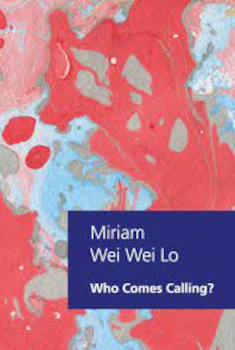
Who Comes Calling? by Miriam Wei Wei Lo, WA Poets Publishing 2023.
Who Comes Calling? is Miriam Wei Wei Lo’s second collection, described by Lo as “the work of thirty years” spanning “a prolonged child-rearing stretch when my poetry practice was the five minutes I had to spare between folding the laundry and falling asleep.” In the poem ‘Ars Poetica’, Lo reminds us that “Without the woman at the kitchen sink, / nothing is possible”, and exhorts us, “(For goodness sake, pick up a teatowel, start drying!)” Lo captures the twin pull of these competing roles – caring and artistic practice – in the lives of women, and the dispiriting voice of its economic rationalism, in the eponymous poem ‘Who Comes Calling?’
I did not want poems. What good did a poem
ever do me? How will poetry feed my children?
Satisfy my parents? What kind of work is this?
As the mother of a high-needs autistic child who needed nine years of home schooling, I recognise Lo’s precious five minutes, and the slimmer poetry output that results from them, all too well; I salute every one of those five minutes as representing dogged holding-on by a woman to her art in the face of care demands in which men often participate less. But since poetry is as much thinking as writing, as much insight as construct, Lo’s thinking and insights have continued to develop and flourish during this time, and these underpin the depth of this collection.
From the opening poem, Opening Australia, the refrain “What could I say” expresses Lo’s lifelong mystification over how to quantify who she “is” and where she “is from”:
…………………What could I say
…………………in humid Singapore
…………………the place where I lived,
…………………most of the time?What could I say
to schoolgirls…
…………………….certain
of Australia…
Here begins the central question of the collection, stated when her brother asks their mother, in ‘A Few Thoughts on Multiple Identity’, “if you’re from Australia and Dad’s from Malaysia and he’s Chinese and you’re Caucasian and I’m an Australian citizen but we live in Singapore, what does that make me?” This is not a question which can be answered simply, if at all, and the resultant poetry is often of nuance, ranging widely through relationships and raising more questions than it answers.
The poems are a series of mirrors in which Lo glimpses, loses and finds self and others. Lo looks for cultural memories of Singapore on a cruise, prior to which the taxi driver has reported, “Sometimes my customers / ask me to take them to a destination, but it is no longer there” ‘Bumboat Cruise on the Singapore River’. There is humour, too, in recognising that she both approaches and erases histories:
I pause a moment,
in reverence for all that is seen and unseen,
and then begin to squirt the Pine O Cleen.– Cleaning Out Beneath the Stove
Much of the collection is free verse in which Lo creates forms and the syntax of formal qualities, as in the tight, disciplined three- and four-line stanzas of ‘Mooncake’, a sensuous exploration of cultural elusiveness. The acclaimed poem ‘Home’, a key one in the collection, powerfully exposes Lo’s fear that she will never find home, even as she repeatedly asserts that she will:
It will be in my mouth – a thin wafer of honey,
the bitter salt taste of my husband’s sweat.
I will see it, I’m sure, yellow as wattle in winter
and brown as the grass under snow.It will be a skyscraper, fifty storeys tall.
It will be the smallest, most picturesque cottage.
I will live there alone and with everyone I love.
As I approach mid-life, and continue to write about the unique experiences of women, I am ever more aware that my entire life has been absolutely nothing like the lives of men. My life has been utterly different, in terms of labour, employment, economics, health, power and relationships. In her elegant, mature poetic voice, Lo articulates this multifarious experience by examining herself in a great array of roles, including homemaker, wife, mother, friend, teacher, daughter, child, Christian disciple, justice-seeker and revenant, to emotionally moving effect, notably in the thrilling ‘No Epidural’ (“I toss my head and walk into the cage. / I take the stance of a fighter”), the unflinching ‘In Memory of Katrina Miles‘, and the tender ‘Still Searching’ (“What blessing do you want from me, my son? Morning will come / too soon with its gift of departure.”)
I’m drawn more often now to writers who use ordinary words with uncommon skill, and Lo achieves this, in what is an assured and resonant second collection. I’ll close with her exquisite love poem ‘Water’ (‘Three Love Poems’), reproduced here in full:
The certainty of water
is that it slips through the fingers
so
let us hold each other loosely
as we drink.
– Esther Ottaway
———————————————
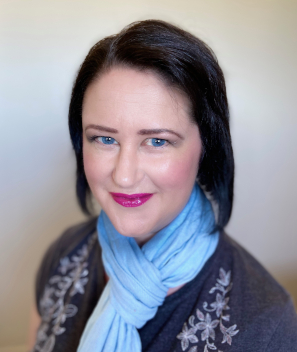 Esther Ottaway has won the Tom Collins, Tim Thorne and Queensland Poetry Festival Ekphrasis Prizes in Australia and has been shortlisted internationally in the Montreal, Bridport, Mslexia, MPU and others. Her work is published and anthologised widely around the world. Esther’s acclaimed third collection is She Doesn’t Seem Autistic (Puncher & Wattmann) and is a powerful exploration of the experiences of women and girls on the autism spectrum.
.
Who Comes Calling? by Miriam Wei Wei Lo, is available from https://wapoets.com/who-come-calling-by-miriam-wei-wei-lo/

 Rochford Street Review