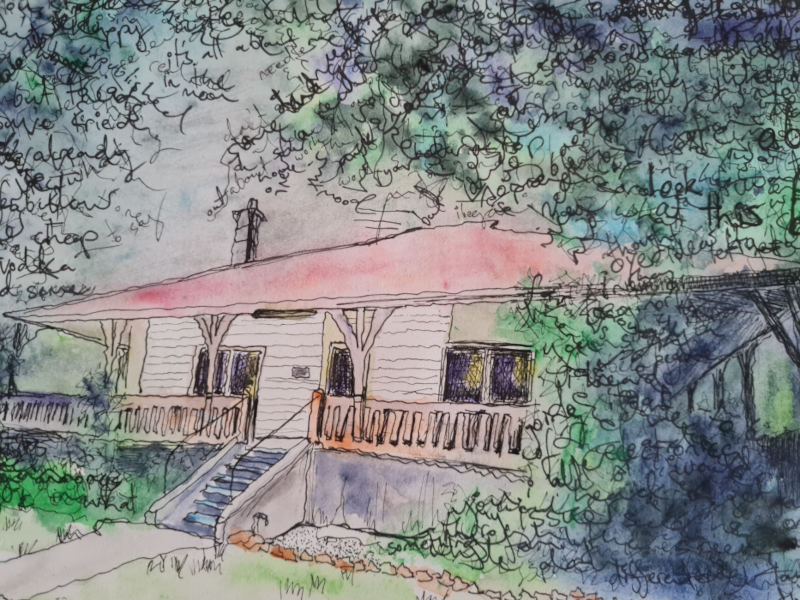
Booranga, watercolour by Derek Motion.
Booranga Writers’ Centre was one of the first of a network of proposed regional writers’ centres in NSW linking e.g. Sydney, Byron Bay, Armidale, Newcastle, Wollongong, Dubbo & Broken Hill. Opened in 1993, Booranga’s distinctive 1896 cottage, on the Wagga Wagga campus of Charles Sturt University, with relative seclusion and close to wine, olives and infrastructure support was a perfect setting for writing (apart from the occasional possum …) Its restoration and make-over, financed by joint contributions of $50,000 from NSW Arts and CSU, created office space, a readings/workshop area and a separate writer’s flat as well as renovated amenities. For some thirty years, funded largely by Create NSW and its predecessors, Booranga has implemented a successful series of writers’ residencies (three or four a year); published an annual anthology of new writing, fourW; collaborated with local educational and arts groups (especially the English Teachers’ Association, the Wagga Wagga City Council and Art Gallery); and fostered the development of regional writers by monthly writing workshops and downtown readings venues.
So, as Dan Holmes wrote in The Daily Advertiser (January 2024), ‘a decision by Create NSW to award funding exclusively to metropolitan writing organisations in the latest round of NSW arts grants …’ was a body-blow to Booranga and regional writing: ‘… While Booranga had its submission for $60,000 knocked back after 30 years of ongoing funding, four city-based writing centres received over $460,000 between them.’
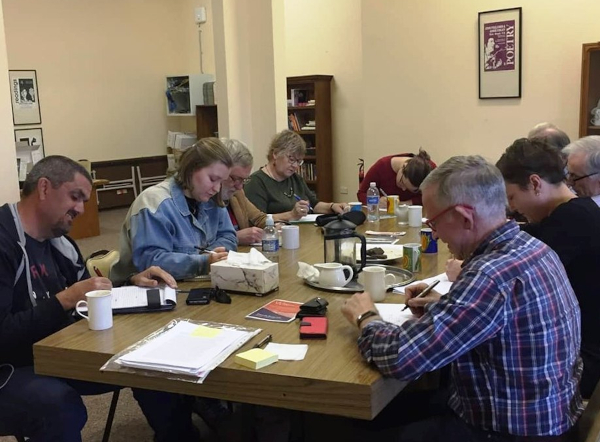
The genius in the NSW funding scheme has been that it focussed on infrastructure: the bulk of the grant paid two part-time arts-worker salaries: a Creative Director (currently Kathryn Halliwell) and a Business Manager (Greg Pritchard). I wouldn’t say they were handsome remunerations and over the years, as the grants were pared back the remuneration seemed increasingly meagre – drip-fed ‘unfunded excellence’? But it meant that Booranga had a core structure whose funding ensured there was paid work for those who applied for grants and managed Booranga’s affairs and those who managed Booranga’s program. Unlike current project-funding, so beloved of governments and institutions, where the permissible admin portion of funding is usually 10-15%, this funding ensured the sustainability of the Centre. The funding also meant that writers-in-residence could be reimbursed for some travel costs as part of a modest stipend. So the grant to Booranga not only supported regional creativity and employment, it fostered community and regional growth, connectivity to other writers in NSW and across Australia, as well as a sense of lively innovation in literary enterprise. Booranga has become both a creative hub in the Wagga region and an engaged, innovative network of writers of many generations, genders and geographies. Of course, the grant also enabled and validated the huge efforts and commitment of its multi-talented and energetic committee of volunteers …
We did receive ‘feedback’ from Create NSW that our most recent application ‘ticked the boxes’ and was ‘recommended for funding’ but at the next stage we were deemed insufficiently competitive with other writers’ centres, We think it’s unfair to compare Wagga and e.g. Armidale (home of New England Writers Centre – like Wagga, sidelined for 2024 funding) with the more densely-populated coastal cities of Newcastle and Wollongong. We can’t help questioning whether the NSW government, in Create NSW is taking its commitment to this region seriously: it’s a hard slog, annually sustaining and advocating for a regional writers’ centre – especially west of the Dividing Range – with modest populations and modest economic quanta. Booranga and NEWC are ‘regional’ in an entirely different way than the coastal centres. Both of us have been ‘strongly encouraged’ to reapply for ‘second-round funding’ which we are doing – strengthening our applications (Did they need it? Were they read in detail?) and including a sense of some shared commitment to regional writers’ exchanges and future collaboration. One attraction of this round is that the funding is for an eighteen-month period and if we’re successful, it will secure both Centres’ operations until the end of 2025.
We have enough funds to keep paying our staff until the end of March (a time-frame that will allow them to apply for this second-round funding) and we only have one writer-in-residence (NZ art historian and short-story writer Penelope Jackson in March) that we’re committed to from last year. We’ll continue with our monthly writers’ evenings at the wonderful downtown gallery/bookshop/café The Curious Rabbit, beginning with children’s picture and audio book author and pod-caster Katrina Roe in February but we’ll hold off any further writers’ residencies until we see how our application fares. We feel compelled to increase our modest membership fee and the fees for submissions for fourW and we’re discussing other ideas for fundraising events, sponsorships and donations.
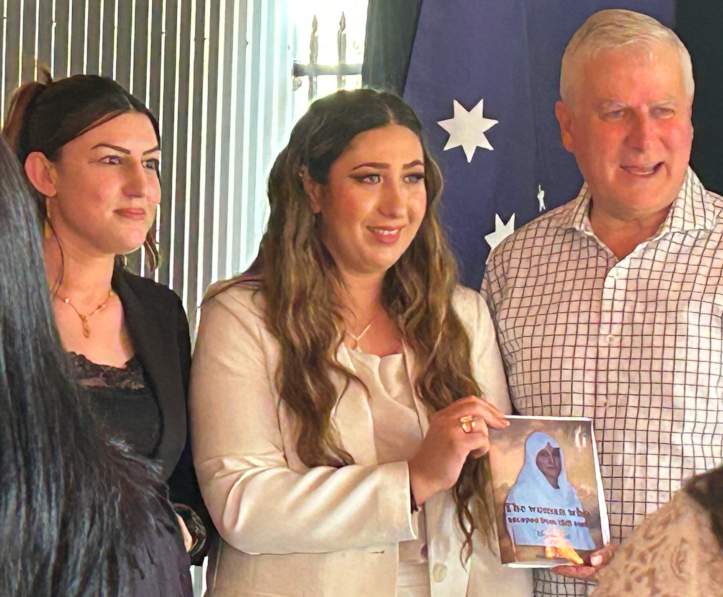
We have written to our community – writers who’ve been in residence and/or contributed to fourW over the years – and been awed by the affirmations about the ambience of Booranga and its significant contribution to creating works that they were starting, editing and went on to publish (‘wouldn’t have been possible without the magic of Booranga’ was a theme) – Tara June Winch, Nat O’Reilly, Keri Glastonbury, Les Wicks – to pick four out of forty. Plaudits for the professionalism and diversity of fourW was another reprise. First nations writers, interstate writers, multicultural, metropolitan-/coastal-/mountain-based writers, young/old writers, gender-diverse writers, politically active and reclusive writers … Several writers have had first collections published through the agency of Booranga and we’ve been connected to Jugiong Writers Festival, Write Around the Murray (in Albury) and The Writing House (in Leeton). Our ‘mentors’ include Jeanine Leane, John Muk Muk Burke, Derek Motion and Lachlan Brown.
As so many of our writers have attested – it would be shameful (and lethal?) to not fund Booranga Writers’ Centre when it’s so manifestly working brilliantly (for the Government as well as for writers and artists) in so many ways. And given that Booranga is a child of Create NSW infanticide isn’t a good look …
– David Gilbey
President, Booranga Writers’ Centre
————————————-
David Gilbey is the founding President of Booranga Writers’ Centre and editor of fourW: new writing.His most recent collection of poetry is Pachinko Sunset (Island Press, 2016). He has taught English for more than forty years, mostly at Charles Sturt University, has reviewed new Australian writing in eg. Southerly, ABR and Cordite and has broadcast on literary & cultural matters on ABC radio.
Booranga Writers’ Centre website https://arts-ed.csu.edu.au/booranga/home
fourW – the annual anthology of new writing website https://arts-ed.csu.edu.au/booranga/fourw-anthology

 Rochford Street Review