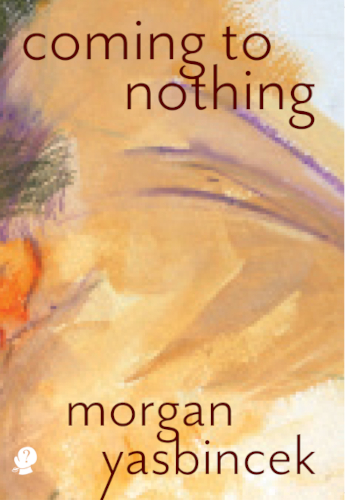
Coming to Nothing by Morgan Yasbincek, Puncher & Wattmann 2023
As Audrey Lorde writes, ‘Poetry is not a Luxury’, for Morgan Yasbincek poetry is a tool for survival of living agency and a means of deep enquiry into the foundational. The poetry collection, Coming to Nothing by Morgan Yasbincek was published by Puncher & Wattmann in 2023. The title of the collection evokes a sense of arrival. It is not becoming nothing it is coming to nothing; it is the state of being humbled before the essential stripped back to what is of intrinsic value. Time and time again whether it be in the face of political engagement in a poem like ‘That Day’, death or tragedy Yasbincek has us standing humbled with her before what is vital. Coming to nothing is coming to no thing, where there is no thing there is bare faced wonder, surrender and immersion in the light of the unknowable.
These poems are lit from within, there are over sixty references to light in the collection. There is ‘gravity away from light’ in the first poem entitled ‘Psalm 21’. The collection introduces light early and sustains it throughout the whole collection. In the poem entitled ‘Sister’ Yasbincek writes:
stars are a comfort – yes, they say, we see you by our
many-years-old light, with the light across years of moving night we see
you standing as one only, we see the bowl of ash, the upturned lines across
your hands, the sorrow smoothed into your still face
She writes of ‘wine alight with seed’ and the poem entitled ‘Rose of Wilyabrup after the spring concert’ she writes:
in the storm light she is somehow lit by this tincture, its colour
nothing like the mixing of red and white, a cordial but not
a plasma, an ethereal pink floating over the sea
at the close of a forty-three-degree day
To quote the poem entitled ‘fool’ these poems have the impetus of, ‘rapture, hell-bent on light’.
The poems embody the agency of the elemental and animal. In, ‘visitors’, a poem facing bereavement, Yasbincek writes:
on way back across the city then out the
other side, glad of the veils of water, car a red fish
riding a current
Yasbincek shows the wind has governance,
paddocks are rectangles of clay dust
wind, a liberated intention, washes me
in air
and the water of a pool is ‘absinthe’, in the visceral of mystic union:
reaching to detect the state of a heart. We swam in that pool, three of us
peacefullymoving as if we were breathing absinthe, water on skin cool
as white linen, the scene completely without any push for purpose, as
though the aggregates of any creature and the world could simply
add up to kindness.
There is exaltation in communion with horses ‘heart to heart with my deep-chested mare’. Horses are godlike with ‘nostrils twin jets of air’ but grounded, they ‘spend their love on hay’.
Figures from mythology are treated with the same levelling compassion as the woman on the train with a ‘lanyard that says “do not disturb”’, levelled but elevated to goddess as the orange she eats is mythic. Thomas from the Bible known for his doubt treated as close and everyday as the woman on the train:
one who needed to touch, who entered
the wound, affirmed at fingertip
electric recognitionthose who have hugged the dead in dreams, or
touched a wound on a loved body newly
changed, may not see him woven in simply as the
doubter, but as one who stepped forward when beckoned
to assure himself of living skin
There is a section in the collection of nine poems that converse with a fragment from Sappho, scenes evoked and made visceral through sensory detail. They collapse time into all time and place, evoke shared humanity. In her brilliant essay length meditation on the fragment at the end of Coming to Nothing entitled ‘Sappho’s Gift a Poetics of the Fragment’ Yasbincek writes of the generative power of the fragmentary, ‘The way these ruptures disrupt temporal linear narrative corresponds to timeless space’ and she writes that this ‘suggests the writing as a space of co-creation’. Here is one co-creation:
Echo – Sappho
someone will remember us
I say
even in another timetoday I leave the touch of my daughter’s
sleeping hand, smoothed
in the dark this morning by my ownstroked her jaw with my other hand and whispered
low, so she wouldn’t wake but would stop
grinding her teethher face did not still, hand twitched in mine
held her to me under the blankets, trying to find
the code to cast peace through her sleep, protect her
from what must come upon her
For Yesbincek ‘Fragmented writing enacts its own breaking/loss and so the effects of trauma, shock, violences of speaking and silence are evidenced on the page’. She writes;
The fragment is compassionate with her. Here she can write, here she can be meaningless and be considered invaluable. The fragment accepts her wounding, shows her how to bear it, reference its mystery.
Mystery because the fragment can’t be resolved. Its shores dissolve into the sublime, the unspeakable and she is not the same again because of this fragment.
You won’t be the same after reading Coming to nothing. Yasbincek writes of the fragmentary:
The address to the reader, to borrow a term from film studies, is a direct address. It breaks the silence between the text and the reader, marks the text as reader-aware, and suggests the writing as a space of co-creation.
Reading, Coming to nothing by Morgan Yasbincek is an opportunity to discover what ‘co-creations’ are possible between reader and writer. For Yasbincek ‘The pen is a lit match’ and ‘writer is a peacemaker’ who ‘writes to survive’. Though engagement with this profoundly intellectually visceral work something of the co-passionate may ignite.
– Claire Gaskin
—————————————-
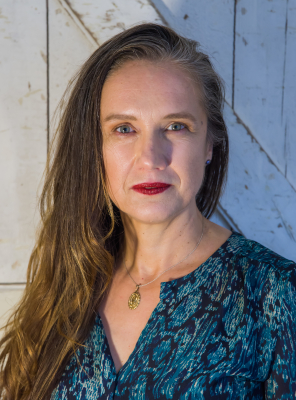 Claire Gaskin lives on unceded Bunurong country. Her first full length poetry collection, a bud, was completed in the receipt of an Australia Council grant and shortlisted in the SA Festival Awards. Her subsequent collections are Paperweight (2013), Eurydice Speaks (2021), Ismene’s Survivable Resistance (2021) and Weather Event (2023). She is currently working on a collection of prose poems supported by a Creative Australia grant.
Claire facilitates poetry courses and is available for private mentoring. clairegaskinpoetry.com
Coming to Nothing by Morgan Yasbincek is available from https://puncherandwattmann.com/product/coming-to-nothing/

 Rochford Street Review