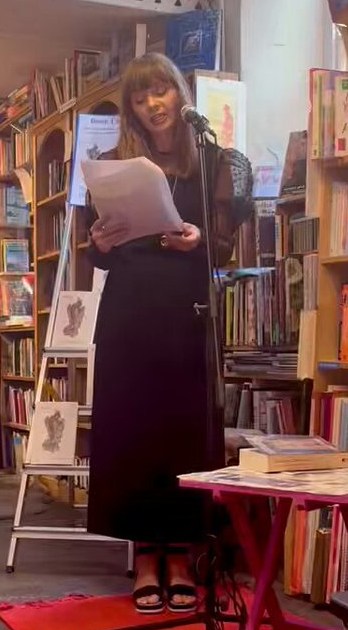
Seang (Hungering) by Anne Casey, Salmon Poetry 2025, was launched by Eamonn Wall on June 21, 2025 at the Salmon Bookshop and Literary Centre in Ennistymon.
Good afternoon, everyone. I have the honor and privilege of providing some comments at this the launch of Anne Casey’s new book and celebration of her work here in Ennistymon, in her home county of Clare.
First, let’s take one step back. In addition to the tears of joy and deliverance that are shed on the emigrant’s/immigrant’s return, these occasions also provide opportunities to exchange gifts. We do so with a mixture of happiness and curiosity. It’s a bit like a second Christmas. Later, we sit down to partake of food and drink and tea to renew our attachments to family, in the largest sense, and to the places that have nurtured us. When we have reconstructed the family unit, we experience great joy. We remember the living and the dead.
On the occasion of this visit home, Anne Casey has returned to us with the gift of Seang (Hungering), her sixth collection of poetry. As many reviewers, writers, and scholars have pointed out over the years, Anne Casey is a writer of great achievement and importance, and I concur with this. I will add that her new book is her best, bravest, and most ambitious work to date, a remarkable and many-sided achievement that elevates her work, thematically and aesthetically, to a new level. Our gift of a second Christmas is to be present for the launching of Anne’s new book, and what a gift it is.
Throughout our history many people have been silenced. Anne Casey’s project in Seang (Hungering) is to give voice to the Irish girls and women who were forced to emigrate to Australia in the decades after the Great Hunger. In this book, we travel both with them from Plymouth to Sydney and join them in their new home Down Under, their strange place in a world literally turned upside down. One of the writer’s functions is to give voice to those who have no voice—whether they are living or dead does not matter—and this is what Anne Casey has set out to do and achieves triumphantly in Seang (Hungering). It is what John Montague did in The Dead Kingdom and Michael Coady achieved in All Souls, both books being modern classic explorations of the Irish diaspora, all achieved through the medium of poetry.
Much has been written on the Earl Grey Scheme that brought young Irish women and girls to Australia: this scheme sent them from the Irish Workhouses to Australia, in large part to compensate for the lack of women there. Between 1848-1850, 4,114 girls aged between 14-18 were relocated to Australia. Anne Casey makes note of these voyages in her book but, also, goes far beyond them. Until she embarked on the research and writing that has culminated in Seang (Hungering), little attention had been focused on the next generation, the children of the children who arrived in Australia and who settled in Sydney, Newcastle, and elsewhere.
Diligently, Anne Casey has combed through archives in both Ireland, Australia, and through digital sources to find records of these girls’ lives and then to reassemble and account for important aspects of their time spent on earth. Though Seang (Hungering) is a collection of poetry it is also a multi-faceted and polyvocal text that includes visual images, official government documents, letters, manifests, among other inclusions that paint many-faceted portraits of both the lives of these women and their lives and times. We read poems in English and poems in Irish. This is the same approach that Montague and Coady took in their work, and which gives all three an almost documentary quality. But poetry is the most important aspect of Seang (Hungering): it too sweeps in many directions with Casey employing an impressive and diverse range of poetic forms and techniques to aid her in her telling of these narratives. Unerringly, she locates the right form for each subject, and this gives the book a most organic, natural, and true sense of poetic truth.
From Anne Casey, we learn what it was like to be a young Irish woman in Australia in the second half of the 19th Century and beyond. Here is a stanza from “A City Girl,” a poem written in memory of in memory of Mary Ann Deveney (1852-1896)
A City Girl
(After Henry Lawson’s ‘A Bush Girl’)She’s walking in the dark and rain,
as her mother had before.
Her skirts are dragging in the drain,
her feet are tired and sore.
In ruined shoes with broken dreams,
She bears the evening chill.
Her dress is ragged at the seams;
she’s nought to pay her lodging bill.
As is often the case in this collection, Anne Casey achieves a wonderful tension between the hard stories of women’s lives and the musicality of the poems. Form and content work so well together that we can almost imagine the girl or young woman singing her own song. One of the great triumphs of this book is how close to her subject the poet can get, and how convincing and believable the voices are.
Of course, given the material that this book focuses on, this is also a raging and fiery book of discovery and witness. We hear voices that are angry, we learn of broken lives, and dreams that do not even emerge enough to be labeled dreams. But there is also a lyrical tenderness to the poems that point toward survival, and the determination of these young women to fight injustice. Today, as we know well, people continue to leave their homes in search of safety. Many, like the girls and young women Anne Casey writes about, are in danger. Seang (Hungering), though it details events that occurred a century ago, speaks also to our present time. It is a triumph.
Congratulations, Anne. Congratulations Rory, her husband who is here to celebrate with her. Thanks to Salmon Poetry, to the Salmon Bookshop, to Jessie Lendennie and Siobhan Hutson Jeanotte (for the glorious design).
To conclude.
Today, on her return home, we are also honoring Anne Casey’s success. Tucked away near the end of this new book is the following note:
This poetry collection, together with the doctoral thesis outlining its research and
writing, was awarded the Distinguished Creative Arts Doctoral Student Award (1st
Prize) by the Deans and Directors of Creative Arts in Australian universities—a
national award for ‘significant contribution to the field of research/practice,
showcasing national-level research outcomes with international esteem potential’ (149)
In other words, Anne Casey wrote the best doctoral thesis in Australia in 2024. She is now Dr. Anne Casey, another reason to celebrate her. Let us put this in context. Of course, we celebrate the acclaim that Anne has earned for her work as a poet, researcher, and scholar. We rejoice in the success of one of our own, we want to give her a hug, or a high-five. But there is also something else to be noted here and it is the sacred notion of service and humility. For this project that took ten years of Anne’s creative life, she has chosen to give voice to the women who were silenced and to perform a wonderful human and public service for her communities in this part of Ireland and in her adopted home in New South Wales, for Ireland and Australia. Writers have the power to give voice to the silenced and this is what Anne Casey does, with great vision and style, in Seang (Hungering). It is a triumph.
– Eamonn Wall
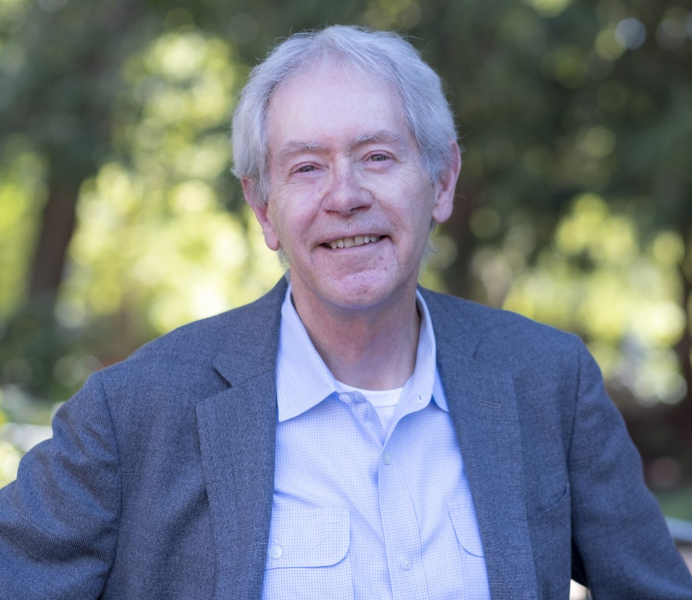 Eamonn Wall is a native of Co. Wexford, Ireland, who has lived in the US since 1982: in Wisconsin, New York City, Nebraska, and for the past twenty years in St. Louis. His books of poetry and prose include My Aunts at Twilight Poker (2023) Junction City: New and Selected Poems 1990-2015 ; From the Sin-e Café to the Black Hills: Notes on the New Irish (University of Wisconsin Press. 2000); Writing the Irish West: Ecologies and Traditions (Notre Dame, 2011). Poems, essays, reviews have been published in The Irish Times, The Washington Post, Prairie Schooner, Reading Ireland, Rochford Street Review and other publications. He works as a professor of Global Studies and English at the University of Missouri-St. Louis.
Seang (Hungering) by Anne Casey is available from https://www.salmonpoetry. com/details.php?ID=635&a=307
 Rochford Street Review