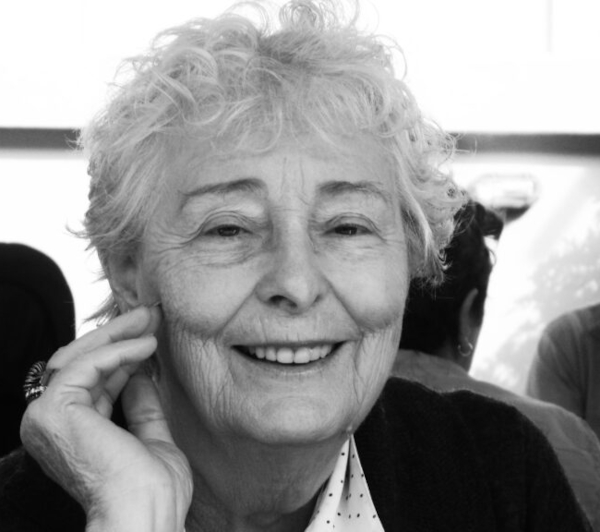
Letters to Dead People and Others En Route by Jennifer Dickerson, Queen Street Fine Art Press, was launched by Cassie Hamer at the Dickerson Gallery on Saturday 15 November 2025
‘A few months back, my husband Sam Dickerson came home with a stack of about 150 loose leaf A4 pages. A little ragged about the edges. Pages missing here and there. This was Jenny’s manuscript – the one she’d been telling us about for a few years – a memoir of sorts but written in the form of letters to various people she’d known in her life, and a few she didn’t.
The question – what to do with it? Find a publisher? Self publish? Or put it back in the drawer. What did I think?
Within two minutes of reading the first letter, I had my answer. I knew, without a shadow of a doubt, that it had to be published, and that Jenny should be the one to do it.
What was in that first letter that so convinced me?
It’s a letter to ‘Mum’ and it tells the story of a little girl who contracts polio at the age of three, is sent to hospital for three months, completely paralysed with her arms and legs in splints. She receives no visitors – the virus is too infectious. She befriends a little boy in the cot next to her but cannot reach out to comfort him and stop his crying because her arms are in splints. When she is finally released from hospital, she cries upon homecoming because she has forgotten her family completely. The little girl is in a body frame, legs and arms buckled down. She will spend most of her childhood and teen years in a wheelchair and splints, learning to walk again. Does she complain? No. She wonders what it must be like for her two sisters, to be deprived of their mother’s attention. She thinks of her mother, and how difficult life must have been for her with a husband off at the war, a child with a serious disability, and two others to care for.
Of course, that little girl is Jenny. And the chief regret in this letter to her mother is that they did not talk more honestly and openly when she was alive – and that’s what this book is – a memoir of things that need to be said.
I wanted this book to be published for two reasons, one of them selfish, one of them altruistic. Selfishly, I wanted this book to be available to my children and their children and their children so that they might know exactly who Jennifer Dickerson is and was. Because this book is Jenny on every page – a woman who is not afraid to call a spade a shovel, a woman who was very much of her time but also very ahead of it. Her wit, her humour, her creativity and talent with words is all here. This book is 100% Jenny.
The second reason for publishing was my firm belief that history is at its most interesting when it’s told by everyday people. Historians can record facts and figures, but they cannot capture what it feels like to be part of a particular period in history. The universal can be found in the specific. Jenny’s experiences, while unique, are very much symptomatic of the experiences of all women of the era. If there’s one theme that dominates this book it’s the struggle for independence and fulfillment and freedom of choice at a time when choices for women were extremely limited.
Jen did it the hard way. At 18, she had the job of her dreams as a journalist for the Murdoch press. She met the famous and the infamous, Frank Sinatra, Laurence Olivier, and Frank Sedgman to name but a few. She became an expert in royal jewellery for the young Queen’s Elizabeth’s tour of Australia and got close enough to curtsey for the monarch and observe her special beauty.
By the tender age of 21, Jenny was pregnant and married – something she welcomed as another adventure but an experience that would define the ensuing decades as ones of struggle as Jen battled through poverty, sexism, domestic violence and divorce. She was a single mother of three at a time when there was absolutely no government support for such families.
Overall, this book tells a story of determination, resilience and survival. It took a heap of pragmatism and a high tolerance for hard work, but together with Robert Dickerson (Bob), her second husband, Jen overcame financial struggle and custody battles to achieve the kind of stability and independence-within-a-relationship that both she and Bob craved.
There’s also bigger picture here, of course. Because it’s thanks to women like Jenny and others of her generation that I stand before you today as a woman with more choice and freedoms than any generation before me. Are things perfect? No. But what this memoir highlights is progress, and that matters.
As many of you know, Jenny recently received a cancer diagnosis which means the future is uncertain, but I take comfort in these final words of the book which is a letter to Bob, her husband of 48 years. She writes ‘You were about the funniest man I ever knew with your quiet dry remarks and could be the kindest too. I miss you and hope I learned something from your life. If we believed in the afterlife I would say, see you soon.’
In some ways we do not need the afterlife because we have Jenny always with us, here on the page. I’m delighted to declare Letters to Dead People and Others En Route, officially launched.’
– Cassie Hamer
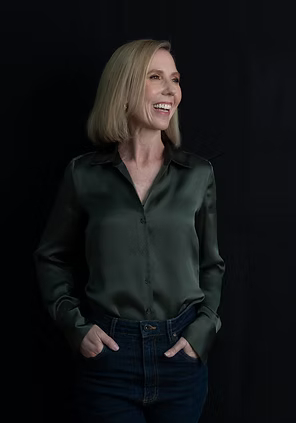 Cassie Hamer has a professional background in journalism and PR, but now much prefers the world of fiction over fact. She is the author of four novels, including the Australian bestseller After the Party. Cassie lives on Gadigal Country in Sydney with her husband, and three children. Cassie is Jennifer Dickerson daughter-in-law. She can be found at CassieHamer.com
.
.
Letters to Dead People and Others En Route by Jennifer Dickerson is available from Amazon or Booktopia

 Rochford Street Review