
Awakening our rage: Rosemary Nissen-Wade reviews ‘Witches, Women and Words’ by Beatriz Copello
Unacquainted with Beatriz Copello’s work before (but eager now to catch up) I was drawn to this book because I’m both a poet and a witch
A Journal of Australian & International Cultural Reviews, News and Criticism.
Unacquainted with Beatriz Copello’s work before (but eager now to catch up) I was drawn to this book because I’m both a poet and a witch

Stephanie Green is a versatile and accomplished writer. Not only has she published criticism, screen studies and biography as a university lecturer, she has also written in various genres such as poetry, short fiction, creative non-fiction and travel essays in literary magazines, anthologies and journals, most recently in Live Encounters, StylusLit, Axon, Meniscus and Queensland Review.

Opening this book at random, I reread a poem that seems simply to capture an idyllic moment. The poet stands on a steamship, an apple in her hand.

Stephen Edgar’s newest book is his thirteenth over thirty eight years, and follows from his much acclaimed The Strangest Place: New and Selected Poems 2020, which won The Prime Minister’s Literary Award for Poetry in 2021.

While the essays are primarily discursive, The Routledge Global Haiku Reader can also be read as an informal anthology aimed at unsettling conventional and often highly defended notions of what haiku is.
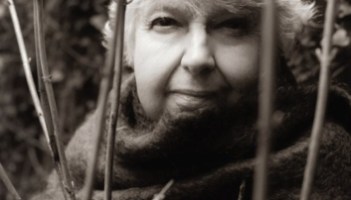
How do feminist activism and poetry come together? Through knowing the world’s cruelty, through acting against it, through writing it into you and out of you, so that there is no doubt that both love and hopelessness ride together.

Rapatahana’s focus rests heavily on language – he argues it can be an oppressor and a liberator. Language matters.

One way of distinguishing the short prose poems of Dominique Hecq’s Endgame with No Ending from, say, flash fiction, would be to argue that while flash fiction’s centre of gravity is narrative, for these prose poems, the centre of gravity is language (or writing) itself. This is not to say that Hecq’s poems are just ‘writing about writing’, but that they address or encompass the materialities of language, textuality, and the conditions of possibility for writing.

As a political refugee, Garrido-Salgado is essentially a travelling poet, and his suitcase of words creates and reimagines home through the act of writing a poem. The dilemma of writing a poem is considered from many angles, including the key concern that the dual tools of his trade, Spanish and English, are the language of the coloniser.
 Rochford Street Review